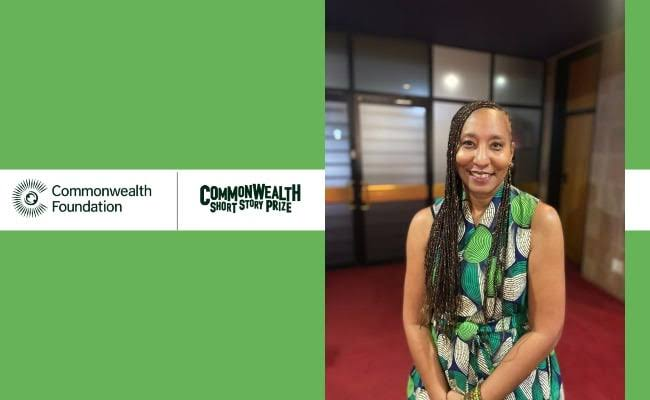
Trinidadian writer Jamir Nazir won the 2026 Commonwealth Short Story Prize on Tuesday for The Serpent in the Grove, taking the 5,000 pound award at the centre of the most damaging authenticity controversy in the prize’s history.
The stakes extend well beyond one ceremony. The Commonwealth prize, drawn this year from a record 7,806 entries across 54 countries, has been one of the few reliable global on-ramps for African writers without book deals. Seven of the 25 shortlisted writers this year were African, four of them Nigerian, and South Africa’s Lisa-Anne Julien won the Africa regional prize for Me and Ma’am, a study of a domestic worker and her employer across a single Johannesburg day.
Then the allegations arrived. Writer and researcher Nabeel S Qureshi flagged passages of Nazir’s story as characteristic of chatbot-generated prose, and Jenna Russell, a research scientist at AI-detection firm Pangram, said three of the five regional winning stories appeared partly or wholly machine-written. The Commonwealth Foundation reviewed the matter, consulted its judges and stood by the results, with Director-General Razmi Farook stating the organisation was satisfied AI was not used to write the winning stories. It has since begun talks on using AI checkers in future cycles.
The collateral damage was immediate. Granta, which had published the regional winners, announced it would end all external publishing partnerships, citing its own editorial integrity. That decision closes a significant publication route for the very writers, disproportionately from Africa and the Caribbean, whom the partnership served.
Whatever the truth of the individual stories, the episode shows how AI suspicion, wielded without transparent standards, can burn down infrastructure that took decades to build for Global South writers, while the detection industry auditioning for the judge’s chair faces no scrutiny of its own error rates.
What to watch: Whether the 2027 prize, opening 1 September, adopts formal AI-verification rules, and whether other prize-linked publishers follow Granta out of the ecosystem.