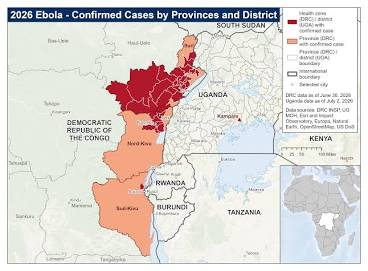
The Bundibugyo Ebola outbreak in the Democratic Republic of Congo and Uganda passed 1,000 confirmed cases by late June, the DRC health ministry says, making it the third-largest Ebola outbreak ever recorded, as the United States extended entry restrictions that bar most travellers who have been in DRC, Uganda or South Sudan within 21 days.
The public health facts first. Both countries declared outbreaks on 15 May after laboratory confirmation of Bundibugyo virus, a strain with no approved vaccine and a fatality rate the US CDC puts between 25 and 50 per cent. The World Health Organization declared a public health emergency of international concern the same week. The outbreak has spread from northeastern DRC into North and South Kivu, provinces where, as this page reports elsewhere, 30,000 rebel fighters and a foreign army are operating. Epidemic response in an active war zone is the real story.
The policy response has been notable for what it prioritised. On 18 May, Washington imposed the first US travel ban ever issued for an Ebola outbreak, invoking Title 42 to bar non-citizens from the three countries, and renewed the order on 21 June for a further 30 days. Canada, The Bahamas, Bahrain, Jordan and Rwanda have imposed their own entry bans, and US-bound flights from the region are funnelled through designated airports.
During the 2018-19 outbreak, US strategy was enhanced screening plus support for containment at source, the approach global health experts overwhelmingly favour because outbreaks end where they start. A blanket ban does nothing for vaccination logistics or treatment capacity in Ituri and the Kivus, and it lands on three African economies already carrying conflict and displacement. Containment is being outsourced to the poorest actors in the chain while the richest closes its door.What to watch: Whether case growth in Kampala forces wider regional restrictions, and whether the 21 July expiry of the renewed US order brings extension or a shift back to screening-based policy.